
Science crafts blend creativity with learning, sparking curiosity in minds of all ages. These hands-on projects not only entertain but also teach fundamental scientific concepts in a fun and engaging way. From simple experiments to intricate models, science crafts can transform everyday materials into fascinating educational tools.
Whether it’s building a volcano that erupts with baking soda and vinegar or creating a solar system with paper mache, the possibilities are endless. These activities encourage exploration and experimentation, making science accessible and enjoyable. As children and adults dive into these projects, they gain a deeper appreciation for the wonders of the natural world, all while developing essential skills like problem-solving and critical thinking.
What Are Science Crafts?
Science crafts are hands-on projects thatmerge creativity with scientific exploration. These activities encourage individuals to engage with scientific concepts through tangible experiences. Projects may range from simple experiments like growing crystals to more complex models like creating a circuit board.
Science crafts often incorporate natural elements, demonstrating principles of biology, chemistry, and physics. For instance, building structures to withstand earthquakes can teach engineering fundamentals, while making slime illustrates chemical reactions.
These projects foster critical thinking and problem-solving skills. By planning, executing, and troubleshooting their projects, participants enhance their understanding of scientific processes. Science crafts also promote teamwork when undertaken in groups, strengthening communication skills.
With a wide variety of resources available, individuals can find crafts suitable for all ages. Online tutorials, kits, and books provide clear instructions, making it easier for anyone to participate. Engaging in science crafts transforms abstract concepts into relatable experiences, creating lasting learning opportunities in a fun environment.
Benefits of Science Crafts
Science crafts offer numerous advantages that promote both creativity and intellectual development. Participants gain a deeper understanding of scientific principles while exploring their artistic sides.
Enhances Creativity
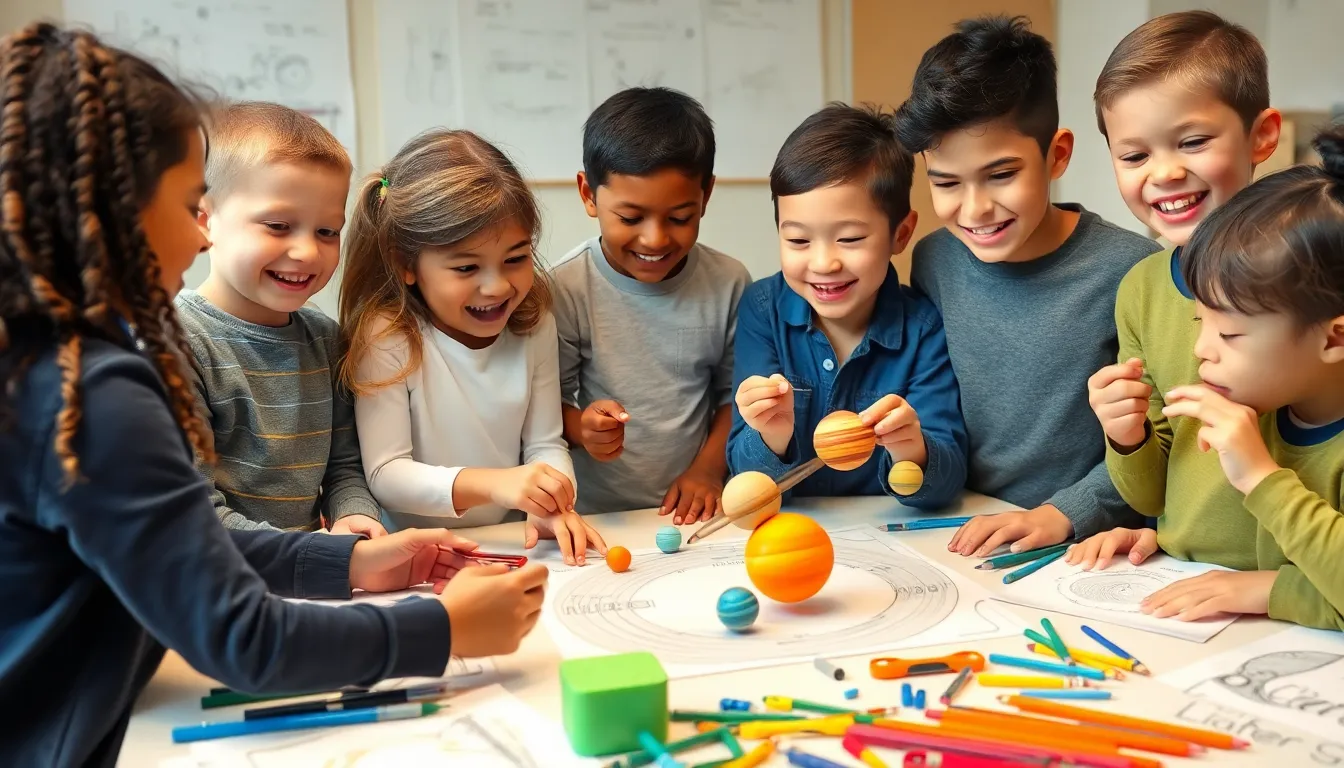
Engaging in science crafts stimulates creativity by allowing individuals to express ideas through hands-on projects. Individuals can design unique experiments, choose their materials, and create artistic representations of scientific concepts. For instance, constructing a model of the solar system not only requires artistic vision but also an understanding of planetary sizes and distances. Such activities foster imaginative thinking, encouraging individuals to innovate and develop original solutions while connecting science with artistic expression.
Encourages Critical Thinking
Science crafts develop critical thinking skills as individuals analyze problems and devise solutions. Participants often encounter challenges during their projects, prompting them to evaluate their approaches and make necessary adjustments. For example, when creating a homemade volcano, individuals must consider the reaction formulas, material selection, and eruption mechanics. This process of inquiry enhances analytical skills, teaches systematic problem-solving, and encourages experimentation with various materials, cementing the understanding of scientific methods and principles.
Types of Science Crafts
Science crafts can be divided into various categories, including indoor and outdoor projects. Each category offers unique opportunities for learning and creativity.
Indoor Science Crafts
Indoor science crafts provide a perfect environment for exploring scientific principles while engaging in creative projects. Activities such as creating homemade slime, growing crystals with sugar or salt, and building simple circuits allow participants to dive into chemistry and physics concepts.
- Homemade Slime: Combining glue, borax, and water creates slime, demonstrating non-Newtonian fluid behavior.
- Crystal Growth: Using sugar or salt in a saturated solution illustrates solubility and crystal formation processes.
- Simple Circuits: Connecting batteries to light bulbs or motors teaches basic electrical principles through hands-on experimentation.
These crafts often require minimal materials, making them accessible for families or classrooms.
Outdoor Science Crafts
Outdoor science crafts invite exploration of nature while incorporating scientific concepts. These projects encourage participants to interact with their surroundings and understand environmental principles.
- Nature Journals: Documenting plants, insects, and weather data teaches observation skills and ecological relationships.
- Solar Ovens: Building solar ovens from cardboard boxes and foil demonstrates principles of solar energy and heat absorption.
- Ecosystem Models: Creating mini-ecosystems in jars showcases food chains and habitat dynamics.
Outdoor crafts offer ample space and natural materials, enhancing the learning experience through direct interaction with the environment.
Popular Science Crafts Projects
Science crafts projects provide interactive experiences that deepen understanding of scientific concepts. Below are detailed descriptions of two popular science craft projects.
DIY Volcano Experiment
The DIY volcano experiment combines chemistry with creativity. Participants can create a simple volcano using baking soda, vinegar, and a container.
- Gather materials: Collect baking soda, vinegar, food coloring, and a plastic bottle or a paper mâché volcano structure.
- Construct the volcano: Place the plastic bottle in a mound of dirt or make a paper mâché volcano.
- Prepare the eruption: Add baking soda and a few drops of food coloring to the bottle.
- Initiate the eruption: Pour vinegar into the bottle to observe a fizzy eruption resembling lava.
This experiment demonstrates an acid-base reaction, offering insight into chemical processes and explosive interactions.
Homemade Solar System Model
The homemade solar system model makes astronomy tangible and enjoyable. Participants can visualize the planets and their orbits through this hands-on craft.
- Collect materials: Gather foam balls of various sizes, paint, string, and a large piece of cardboard.
- Create the planets: Paint the foam balls to represent different planets, ensuring each one reflects its unique colors and features.
- Construct the sun: Select the largest foam ball as the sun, positioning it at the center of the cardboard.
- Position the planets: Attach the painted planets to strings of varying lengths and arrange them around the sun to illustrate their orbits.
This project teaches the solar system’s structure, including the relative sizes and distances between celestial bodies, enhancing understanding of space science.
Tips for Successful Science Crafts
- Select appropriate projects. Choose science crafts that match participants’ age and skill levels, ensuring an engaging experience that challenges without overwhelming.
- Gather necessary materials. Collect all needed supplies before starting the project. This streamlines the process and helps maintain focus on the task at hand.
- Follow safety guidelines. Prioritize safety by reviewing any hazardous materials or tools. Use gloves and goggles when necessary and supervise children during potentially risky activities.
- Encourage creativity. Allow participants to personalize their projects. Creative expression enhances engagement and fosters a deeper connection to scientific concepts.
- Incorporate scientific explanations. Explain the science behind each craft. Relating the activity to underlying principles solidifies understanding and reinforces learning.
- Document the process. Take photos or videos during project execution. This documentation serves as a reminder of learned concepts and can inspire future projects.
- Evaluate outcomes. Discuss what worked well and what didn’t after finishing the project. This reflection reinforces critical thinking and problem-solving skills.
- Promote teamwork. Encourage group projects to build collaboration and communication skills. Working together fosters idea sharing and enhances the overall crafting experience.
- Utilize additional resources. Explore online tutorials, instructional videos, and books for more guidance. These resources broaden knowledge and expose participants to various crafting techniques.
- Adapt to varying difficulties. Adjust project complexity based on participant feedback and experience. Tailoring difficulty levels ensures ongoing engagement and satisfaction.
Science crafts offer an engaging way to blend creativity with essential learning. They invite individuals to explore scientific concepts through hands-on experiences that are both fun and educational. By participating in these activities, people of all ages can develop critical thinking skills and enhance their understanding of various scientific principles.
Whether it’s building a volcano or creating a solar system model, these projects foster a deeper appreciation for science and the natural world. With countless resources available, anyone can embark on a science craft journey that sparks curiosity and innovation. Embracing these projects not only cultivates a love for science but also nurtures creativity and teamwork, making learning an enjoyable adventure.