

The duel between Aaron Burr and Alexander Hamilton in 1804 marked a pivotal moment in American history, leaving a legacy of intrigue and controversy. As the nation grappled with the implications of this fatal encounter, questions arose about Burr’s feelings in the aftermath. Did he experience regret for taking the life of one of the founding fathers?
Burr’s motivations and the consequences of his actions have been debated for centuries. Some argue he felt justified in defending his honor, while others believe the weight of Hamilton’s death haunted him. Understanding Burr’s perspective not only sheds light on his character but also reflects the complexities of early American politics. Exploring this topic reveals the human emotions behind historic events and invites readers to consider the moral dilemmas faced by those in power.
Historical Context of Burr and Hamilton
The relationship between Aaron Burr and Alexander Hamilton significantly influenced early American politics. Their interactions, shaped by ambition and rivalry, culminated in the infamous duel of 1804, marking a pivotal moment in U.S. history.
Overview of Their Relationship
Burr and Hamilton’s relationship evolved from political allies to fierce adversaries. Initially, both operated within the same political circles, with shared interests in the early formation of the republic. However, as ambitions diverged, personal and ideological conflicts arose. Notable events, such as Hamilton’s opposition to Burr during the 1800 presidential election and Burr’s eventual rise to the vice presidency, intensified their rivalry. Hamilton’s public criticisms of Burr’s character fueled tensions, leading to the duel, which symbolized the climax of their animosity.
The Political Climate of the Era
The early 1800s marked a turbulent period in American politics, characterized by intense factionalism. The Federalists, led by Hamilton, supported a strong central government and advocated for a robust financial system. Conversely, the Democratic-Republicans, aligned with Burr, championed states’ rights and agrarian interests. This political divide fostered hostility among leaders, with honor and reputation often taking priority over diplomatic resolution. The rivalry between the two factions not only affected their personal relationship but also reflected the broader struggle for power within the young nation, culminating in the violent confrontation between Burr and Hamilton.
The Duel: Key Events and Consequences
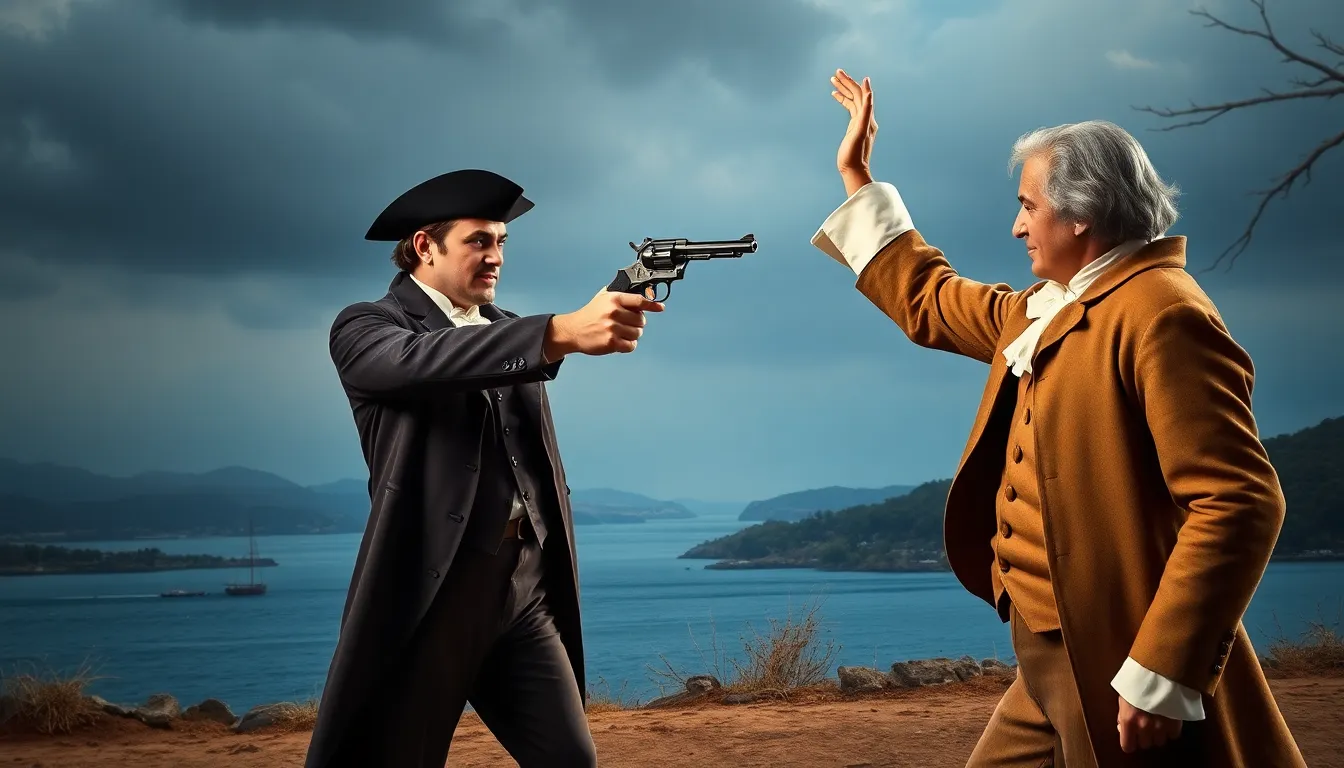
The duel between Aaron Burr and Alexander Hamilton marked a pivotal moment in early American history. Its aftermath prompted widespread debate about the motivations and emotions of the key players involved.
Leading Up to the Duel
Conflicts simmered between Burr and Hamilton for years. Their rivalry intensified after Hamilton actively opposed Burr during the contentious 1800 presidential election, where Burr’s candidacy threatened Federalist dominance. In 1804, Hamilton criticized Burr’s ambitions, branding him as untrustworthy and dangerous. Burr perceived these character attacks as affronts to his honor. Following a particularly harsh remark from Hamilton, Burr challenged him to a duel, viewing it as the only path to restore his reputation.
The Duel Itself
On July 11, 1804, the duel took place in Weehawken, New Jersey. Both men engaged in a fateful confrontation, armed with pistols. Historians note that Hamilton fired his shot into the air, a gesture suggesting reluctance to kill Burr. In contrast, Burr aimed directly at Hamilton, striking him in the abdomen. Hamilton fell, mortally wounded, and died the following day. The duel not only ended Hamilton’s life but also irrevocably altered Burr’s political future, leading to his vilification and emboldening accusations of murder in the public eye. The consequences of this encounter rippled through American politics, shaping perceptions of honor and mortality in a burgeoning nation.
Perspectives on Burr’s Regret
The question of whether Aaron Burr experienced regret after killing Alexander Hamilton remains a topic of debate among historians. Insights draw from historical accounts and primary sources that shed light on Burr’s emotions and thoughts following the duel.
Historical Accounts of Burr’s Feelings
Historical accounts present mixed perspectives on Burr’s feelings after the duel. Some contemporaries reported that Burr felt a profound sense of guilt and isolation. After Hamilton’s death, Burr faced public scorn and political ostracism. In 1807, he wrote to a friend about the “deep water” he found himself in, indicating his distress over the incident. Other accounts suggest Burr viewed the act as a necessary means to defend his honor, highlighting a conflicted mindset. Newspapers of the time varied in their portrayal, with some depicting Burr as a villain while others highlighted the societal norms surrounding dueling.
Examination of Primary Sources
Primary sources provide valuable insights into Burr’s psyche. Letters written by Burr and interviews reveal ambivalence about his actions. One exchange includes Burr stating that he felt “neither remorse nor terror” immediately after the duel, suggesting a temporary emotional detachment from the consequences. In contrast, subsequent reflections indicate an evolving apprehension. For example, Burr indicated in later writings that he recognized the permanence of death and deep societal shifts his actions ignited. These documents reinforce the complexity of his character and the moral implications of his actions, emphasizing the weight of his decision in a changing political landscape.
Public and Personal Reactions
The duel between Aaron Burr and Alexander Hamilton sparked significant public and personal reactions, shaping perceptions of both men and their legacies.
Immediate Aftermath of the Duel
Immediately after the duel, Burr’s feelings fluctuated between triumph and turmoil. He faced immediate backlash, perceived by many as a murderer. Burr’s actions drew widespread condemnation, with prominent figures expressing outrage. Reports suggest he experienced a profound sense of isolation, engulfed in guilt for taking a life, even if legal justification existed under the code of honor. His initial detachment from the event gave way to deeper reflections, highlighting an internal conflict regarding his actions and their moral implications.
Long-term Impacts on Burr’s Life
Burr’s long-term life was irrevocably altered after the duel. Public opinion turned sharply against him, resulting in social ostracism. He struggled to regain political influence, facing challenges in his career. The societal shifts ignited by the duel reflected larger debates about honor and morality in American society. Burr’s legacy transformed from an ambitious politician to a controversial figure synonymous with political violence and internal conflict. The duel not only ended Hamilton’s life but also marked the decline of Burr’s political aspirations, reflecting a pivotal moment in early American history.
The legacy of Aaron Burr and his fatal duel with Alexander Hamilton continues to spark debate among historians and enthusiasts alike. While some argue that Burr felt justified in defending his honor, others point to a deep-seated regret that haunted him for the rest of his life. The complexities of his emotions reflect not only personal turmoil but also the broader moral dilemmas faced by political figures of the time.
As Burr navigated the fallout from the duel, his transformation from a prominent politician to a figure of infamy underscores the lasting impact of that fateful day. The question of regret remains a poignant reminder of the human cost of political ambition and the weight of decisions made in moments of conflict.